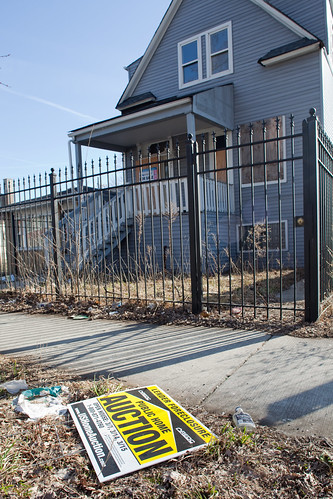
Showing posts with label foreclosure. Show all posts

Thursday, September 15, 2011

foreclosure homes


INVEST 2010 in Stuttgart, Germany by Commerce Resources Corp. (TSXv: CCE)


You've undoubtedly seen these or read them. Glossy ads or four-color spreads in periodicals and magazines promising to teach you every one of the juicy information about successful property investing. And all you need to do to learn each one of these real property investing surface encounters chuck russo secrets is to pay a rather high sum for a one-or two-day seminar.


Often these types of slick real estate investing workshops claim you could make wise, profitable property investments with zero money lower (other than, of program, the hefty fee you pay for the workshop). Now, how interesting is which? Make a profit from real estate investments you made with no money. Possible? Not probably.


Successful owning a home requires income. That's the type of any type of business or investment, especially real-estate investing. You put your cash into something which you hope and plan is likely to make you additional money.


Unfortunately too few newbies to the world of real-estate investing think that it's the magical kind of business exactly where standard business rules don't apply. Simply put, if you need to stay in property investing for a lot more than, say, a day time or two, then you're going to have to generate money to use and invest.


While it may be true that buying property with absolutely no money down is straightforward, anyone who's even made a fundamental investment (like buying their own home) is aware there's much more involved in real-estate investing that will set you back money. For illustration, what concerning any required repairs?


So, the number 1 rule people new to real property investing must remember is to have obtainable cash stores. Before you decide to actually perform any real estate investing, save some cash. Having just a little money inside the bank when you start real property investing surface encounters chuck russo can help you make more profitable real estate investments in rental properties, for example.


When real-estate investing inside rental attributes, you'll want to be able to select only qualified tenants. If you might have no cash flow when property investing within rental attributes, you may be pressured to take in a a smaller amount qualified tenant because you need somebody to pay for you money to be able to take treatment of fixes or attorney fees.


For almost any real est investing, meaning leasing properties or properties you get to sell, having funds reserved can enable you to ask for any higher cost. You can request a higher price out of your investment because an individual surface encounters chuck russo won't feel financially strapped as you wait for an offer. You won't be backed into a corner and forced to accept just any offer because you desperately need the money.


Another downfall of many new to real-estate investing is, well, greed. Make a profit, yes, but don't become thus greedy that you simply ask regarding ridiculous leasing or second-hand rates on any of your real property investments.


Those a new comer to real estate investing have to see real-estate investing as a business, NOT a spare time activity. Don't believe real est investing will make you rich overnight. What business does?


It requires about half a year to decide if real-estate investing set for you. If you have decided in which, hey I really like this, then give yourself a few years to really start earning profits. It typically takes at least five years to get truly successful in real estate investing.


Persistence is the key to success in real-estate investing. If you have decided that property investing is for you, surface encounters chuck russo keep plugging away at it and the rewards will be greater than you imagined.


The manic depressive market wildly swings up and down on each new news story: The Fed is meeting at Jackson Hole on August 27 possibly to discuss QE3 (or not), and that news may pump up the stock market. But China's banks seem to be using Enron's accounting manual, Europe's banks need liquidity and are loaded with bad debt, and U.S. banks only temporarily TARPed over trouble. Gaddafi's regime in Libya appears over, but Libya's oil output may not fully recover for years. Venezuela wants banks to open their vaults and send back its gold, but Wells Fargo says gold is a bubble. Pundits say gold is a barbarous relic, but exchanges and banks are now using gold as money. The U.S. is headed for hyperinflation with skyrocketing stock prices, but on the other hand, we seem to be deflating like Japan and doomed to a deflating stock market for another decade. Whom do you trust and what should you do?


No one knows where the stock market or U.S. Treasury bonds are headed tomorrow, but in my opinion, here are some fundamentals to consider.


The Bad News Isn't Going Away


Until we have real global financial reform and restrain the banks, we won't have sustained growth. The stock market hasn't hit bottom. There's a crisis of confidence in banks and all currencies. We haven't taken effective steps to tackle the U.S. deficit through productivity. We haven't examined spending to eliminate fraud and waste, and we haven't addressed our need for more tax revenues by eliminating the Bush tax cuts (for starters).


Savers are punished by "stranguflation:" negative real returns on "safe" assets, declining housing prices, and rising costs of food, energy and health care. The Fed touts the falling cost of I-Pads, but how often do you buy one of those, and how often do you eat?


Good News (for Now)


The USD is still the world's reserve currency. Even though we devalued the USD, there has been a global flight to U.S. Treasuries pushing down our borrowing costs (yields). No one in the global financial community feels the U.S. has done its best to correct our problems, but severe problems in Europe, China's inflation, and Middle East unrest has money running to the U.S. Since we've devalued the dollar, we appear to be a bargain for foreign investors, even though they are terrified by our money printing presses and the potential for inflating commodity prices in the long run.


How did I play this? My own portfolio is currently more than 20% gold with some silver, and I bought out-of-the-money call options on the VIX when it was in the teens with maturities of 4-6 months. This is "short" stock market strategy, one could have also done well buying puts on the S&P a few months ago. In the first big stock market downdraft in August, I sold the options when the VIX hit the high 30's, and I'll buy more options again if the VIX falls again. Many investors are not comfortable with options, and this strategy isn't appropriate for everyone. The rest of my portfolio is chiefly in cash or deep value opportunities.


What Happens Next?


No one knows for sure, and anyone who tells you he or she does is selling snake oil. The situation is fluid. We tried to reflate our deflating economy. Our massive dollar devaluation may encourage investment, because it's protectionist. It reduces our cost of labor, among a few other "benefits." The problem is that the Fed has printed money, and we haven't done anything to position the U.S. for greater productivity. We're trying to inflate our way out of a problem without investing in productivity. This is a very dangerous way of attacking this problem. Even more "stimulus" would just be an attempt to inflate our way out of our long-standing deep recession. That's the foolish and unsuccessful strategy we've adopted so far. That could lead to runaway budget deficits (our deficit already looks intractable) and bring us to double-digit inflation. Even the European flight to US Treasuries may not save us from a deeper recession in that scenario.


If we don't overreact -- and we may have already overreacted -- our dollar devaluation results in our foreign trade situation first getting worse (as it has now) before it gets better. Now is the time (actually, we should have started years ago) to spend capital to increase U.S. productivity. The dollar's plunge relative to other currencies will eventually make us more competitive. This will be good for blue chip companies, in particular those that own real assets and manufacture items. The Fed and Washington may do anything, however, so one must watch the news.


What does this mean for the U.S. stock market? In my opinion, it is currently not good value and feels like the 1970s when we experienced a recession followed by inflation. One should consider staying mostly in cash and expect stocks become cheaper. One might miss an interim rally, especially if the Fed announces QE3 (more "stimulus" and money printing) or more bank bailouts, but that is like using Kleenex laced with sneezing powder. We will see stock prices even lower than they are today. The old paradigm dictated that stocks were a buy when P/E ratios were 13 or less (and many are well above that), dividends at 4%, and book values at 1.3 or less. (This excludes oil companies, which tend to trade at lower P/E ratios in general.) I believe we'll see much better deals in coming months. In 1978/79 P/E ratios sank below 7 for blue chip companies.


Should one buy U.S. Treasuries with long maturities? The long end of the bond market doesn't reward investors due to the potential of rising interest rates. If interest rates spike to double digits, then one can reassess the situation.


Long term investors should consider buying commodities or companies that own physical commodities. We're running out of key commodities especially related to agriculture and fertilizer. Washington's brand of the latter isn't the type we need.


Warren Buffett just announced that he's making a landmark investment, $5 billion, in Bank of America.


Bank of America was facing a free-falling stock price and a number of criticisms, including that it did not have enough capital, and that its assets were not worth what it claimed.


Now thanks to Buffett, that will certainly change.


When similar investments were made in Citi and in Goldman Sachs, by Prince Alwaleed and Warren Buffett, in 1990 and 2008, respectively, the stocks experienced long term gains. 


And get this - he says he dreamt up the idea to invest in Bank of America in the bathtub on Tuesday. He liked it, so he called Moynihan on Wednesday morning. The entire story of how it happened is available in a video embedded below, as told to Becky Quick by Buffett.


The story (and the mental image) is amusing but also important - it suggests that the Obama Administration and/or the Treasury, did not have a hand in the agreement.


And to make it very clear that Treasury or Obama had no hand in the arrangement, which makes the news even better for Bank of America.


So does this - the deal is expensive for Buffett, and a good deal for Bank of America. He says in some ways, it's better than the deal he gave to Goldman Sachs in 2008.


But obviously, it's a great deal for Buffett.


Buffett's investment alone is now worth $700 million more than it was when he bought it.


Thursday, September 9, 2010

foreclosure victims

Demand: fewer new households

Household creation depends on the state of the economy. The combination of high unemployment, weak wage and salary growth, and tight credit has led to a decline in household growth over the past few years. The two main surveys of household formation from the Census Bureau – the Housing Vacancy Survey and Current Population Survey – show that about 500,000 households were created annually over the past three years compared to an annual average of about 1.2 million during the first half of the decade (Figure 6). How can we explain such a notable drop in household formation?

Moving in with the folks

The obvious answer is to look at homeownership rates, which have tumbled to 66.9% from a peak of 69.2% in 4Q04. This translates to a loss of nearly 2.5 mn homeowners. Most of these homeowners became renters, which means they remain a household, but not all. As can be seen by the surge in the rental vacancy rate to 10.6%, it seems that there was not a perfect shift from homeowners to renters (Figure 7). This begs the question: what happened to these former households? There was doubling up among economically stressed households; in other words people moved in with friends or family. Many of these former homeowners were probably foreclosure victims (Figure 8).

As Figure 8 shows, household formation can also decline if there are fewer young households created to replace the aging homeowners. Given the nearly 10 point surge in the unemployment rate among 16 to 24 year olds from the trough to peak during this cycle, it seems like this was a considerable factor. A recent paper sponsored by the Research Institute for Housing America estimates that the probability of a young adult forming a household declines by 4% during a recession, and up to 10% if unemployed. In addition to the slowdown in “headship rates” domestically, there was a drop in household formation from immigration. According to the Office of Immigration Statistics at the Department of Homeland Security, the number of unauthorized immigrants decline by 1.0 million from 2007 to 2009 compared to a net gain of 1.3 million from 2005 to 2007.

Household growth to improve, but with a lag

Household formation will naturally pick up as the economy improves, but if our forecast for a sluggish recovery is realized, household growth will also be lackluster. The main factor influencing household growth will be the state of the labor market. The above-referenced paper finds that the unemployment rate must fall by 2pp from current levels to return to normal rates of household formation of about 1.2-1.4 million a year. We do not expect the unemployment rate to reach the mid-7% range until 2013, implying another two and a half years of sluggish household formation of about 800,000 a year. This is also when we expect the pace of foreclosures to slow notably, which means that fewer households will have to double-up.

Looking ahead to 2013 and beyond, we use forecasts from the Joint Center for Housing Studies at Harvard University. They present two possible trajectories for household growth: 1) an average of 1.48 million annually through 2020 assuming net immigration returns to the 2000-05 pace and headship rates at 2008 levels; and 2) an average of 1.25 million annually through 2020 assuming the same 2008 headship rates but slower immigration. We believe the latter is more likely and use this as our baseline forecast (Figure 9).

Renters will take market share

Although we expect household formation to start to improve in 2013, the homeownership rate should still fall further, suggesting that most of the gain in households will be due to an increase in renters. This is because there is still a considerable number of homeowners with mortgages in some stage of delinquency that are likely to end in foreclosure. Based on data from the Mortgage Bankers Association, there are about 5.5 mn seriously delinquent mortgages currently outstanding.

A recent paper by economists at the NY Federal Reserve (Haughwout, Andrew, Richard Peach, Joseph Tracy. “The Homeownership Gap”, Federal Reserve Bank of New York Current Issues in Economics and Finance, Volume 16, Number 5, May 2010) attempts to quantify the effective lower bound for the homeownership rate. They make the assumption that underwater borrowers (negative equity), who currently account for about a quarter of mortgage holders, will transition to renters over time. Subtracting these underwater borrowers yields an “effective homeownership rate” of 61.6% (Figure 10). This would be a record low in the data which goes back to 1965. We do not expect such a precipitous drop because not all underwater homeowners will become renters. Indeed, a recent study by Trulia.com and RealtyTrac found that 59% of respondents would not go into foreclosure simply because of negative equity. We believe it is more likely that the homeownership rate will bottom at 65%, returning to mid-1990s levels.

It is plainly obvious why the demand-side is so often ignored in polite conversation: it is the consumer-driven aspect of the house price variable, over which neither the Fed, nor the Treasury, nor the FHA has any authority, and which is a function purely of expectations of the future. Alas, those right now are lously and getting worse. We expect that Demand-side housing economics will take on progressively more importance in the future, as it becomes obvious that no amount of Supply-side tinkering will prevent another 20% drop in prices.

And speaking of Supply, this is also a critical factor, if much more prevalent in the daily media. Alas, that in itself does not make the problem any easier to resolve.


Two brothers have been charged with a widespread real estate fraud that provided them with a "lavish lifestyle," the San Diego County district attorney announced Tuesday.


David Zepeda, 57, and John Zepeda, 59, are charged with 104 felony counts that include identity theft, forgery, grand theft, rent skimming and conspiracy.  The brothers' scheme allegedly involved properties in several counties, more than 300 victims and losses of more than $1.5 million.


Investigators have seized items allegedly bought with the stolen funds, including silver coins, gold ounces, diamond bracelets, expensive watches and a Bentley automobile.


The scheme allegedly involved properties in foreclosure that the brothers acquired through phony quitclaims and forged deeds and then rented out. In other cases, the brothers allegedly convinced homeowners to transfer property to them as a way to avoid foreclosure.


"This is yet another example of the various types of foreclosure scams we continue to see in the county," said San Diego County Dist. Atty. Bonnie Dumanis.


-- Tony Perry in San Diego


Photo: Bentley seized during raid on brothers' residence in San Bernardino. Credit: San Diego County district attorney's office


eric seiger

Pentax K-r mid-level DSLR announced with brief hands-on: Digital <b>...</b>

Pentax Kr mid-level DSLR announced with brief hands-on: Pre-Photokina 2010: Pentax has announced the Kr, its latest mid-level DSLR. Initially sitting above the Kx in the range it offers more angular, K-7-esque styling, 6 fps continuous ...

Finally! <b>News</b> on When We&#39;ll See Terrence Malick&#39;s &#39;Tree of Life <b>...</b>

What's the best way to get an auteur to finish his long-awaited film? A deadline, of course! Everyone needs 'em, even (or especially) Terrence Malick,

AMERICAblog <b>News</b>: Stop The Press

An NBC News spokesperson says: "Our policy is to cover news events as they take place, and report on them with context and perspective. The determination about what images are appropriate and will be broadcast will be made by NBC News ...


Thursday, September 2, 2010

foreclosure search


I think that if you trace HAMP to the source you will find this was an invention of the bureaucrats at the Treasury who fooled both the public (and probably Obama, perhaps the new Secretary) and even the banksters. If you read the implementing instructions it becomes clear this is a maze that few can find an ‘approved’ entry to or exit from. Just the ‘dictionary’ was 136 lines with 10 cells on an Excel spreadsheet (190kb). I was looking at the fifth revision.


HAMP did forestall a few foreclosures, but it took jumping through hoops. Only a small sum went to the service folks and the rules were changed quarterly. On the banks side they wanted it to work as it could put off the loss while it was in HAMP. It was badly implemented because it was like that pea and shell game. I got a headache reading through all the ‘rules’ and categories and realized this lacked a hard and fast rule. It was ‘optional’ for the bank and the borrower.


It is fair to blame the banksters for most of the failure, but the Treasury was most at fault and those folks who created it are the crats who are not swept away with a changed administration. These critters do either retire or seek jobs with those who must figure out the rules.


I’m giving Obama and maybe even Timothy a pass on this one.. they had a lot on the plate and let the crats do the chores. Congress is who I’ll blame.. they should have never raised the lending limits that Fannie and Freddie could provide as that’s what sent this bubble aloft. People have to have jobs that pay enough to pay these loans. They did not and even as we see from this tale.. people have tried and can’t due to a host of issues.. but folks… a $2,600@ payment is only part of home ownership. You need a net income of $10,000@ month to service such a debt. Clearly a lot of folks were to blame.


‘Wanting’ this house is not planning so as to afford it. People acted imprudently and now we’re ALL going to pay and pay and pay. The lawyers and banksters never pay, which is why they need to be REGULATED. That is worth getting angry over. Home ownership was never (after maintenance, taxes and insurance) going to appreciate more than 1-2% a year.. if you maintain and update. The whole idea of buying houses that will eat your income to the extent these folks have was NUTS.


Yes it was also a stall tactic, but that’s not a bad thing given the mess we’re all in. Congress are who we need to rail on. Fannie and Freddy need to go away. Local banking isolated from the ‘products’ is what we need back. They worked and worked with the borrower. Today the investors are detached and suckers too.


As investors search for yield anywhere and everywhere, bonds are trading in uncharted territory. Please consider Obama Wins Low Yield as Markets Shrink Aiding Deficit

Bond investors seeking top-rated securities face fewer alternatives to Treasuries, allowing President Barack Obama to sell unprecedented sums of debt at ever lower rates to finance a $1.47 trillion deficit.

Shrinking credit markets help explain why some Treasury yields are at record lows even after the amount of marketable government debt outstanding increased by 21 percent from a year earlier to $8.18 trillion. Last week, the U.S. government auctioned $34 billion of three-year notes at a yield of 0.844 percent, the lowest ever for that maturity.

Spending by companies and consumers has slowed as the economy has shown signs of weakening. Companies in the Standard & Poor’s 500 Index have stockpiled a record $2.3 trillion of cash and equivalents. Company borrowing slid 29 percent in the first half of the year to $528 billion amid a dearth of business investment, Bloomberg data shows.
Piles of Cash Equates to Piles of Debt

Companies are piling up cash alright. However, the flip side of that cash is debt.

Moreover, analysts mistake that cash for willingness to expand. The reality is corporations do not want to get trapped like they did in 2008, unable to borrow.

For more on corporate cash levels, please see Are Corporations Sitting on Piles of Cash?
Individuals are also hoarding cash. The U.S. savings rate reached 6.4 percent in June, up from 1.7 percent in August 2007, the start of the financial crisis.
Are Individuals Hoarding Cash?

Individuals are not really "hoarding cash" either. Instead they are paying down debt. Most do not realize that by definition, paying down debt constitutes "saving".

For most wage earners, the savings rate is after-tax salary minus personal consumption expenditures (PCE). For a more precise definition, please see What's Behind The Soaring Savings Rate?
“There’s been a collapse in both consumer and business credit demand,” said James Kochan, the chief fixed-income strategist at Menomonee Falls, Wisconsin-based Wells Fargo Fund Management, which oversees $179 billion. “To see both categories so weak for such an extended period of time, you’d probably have to go back to the Depression.”
Food Stamps and Unemployment Insurance Mask Depression

I believe we are in a depression now. The key difference is food stamps and unemployment checks have replaced bread lines.

We also have hundreds of thousands of people living in their homes without making payments on their mortgage or home equity lines. The slow foreclosure process encourages more to do the same.
“The diminishing supply” of alternatives to Treasuries “is giving Washington an opportunity to continue with its fiscal irresponsibilities,” said Mark MacQueen, partner and portfolio manager at Austin, Texas-based Sage Advisory Services, which oversees $8.5 billion. “The only way to tell Washington and America ‘no more’ is a weak dollar, which eventually leads to higher interest rates.”

“We are slowly playing a fool’s game as rates go further down to unsustainably low levels,” said Dan Shackelford, a money manager who helps oversee $15 billion in fixed-income assets at T. Rowe Price Group Inc. in Baltimore.
Thoughts on the Fool's Game

If you are managing $15 billion thinking it is a "fool's game", then in my opinion you ought not be doing it. It seems to me there is a lack of fiduciary responsibility if one is investing client money in a "fool's game".

What the hell - Anything for a fee!

I do think corporate bonds, especially most junk is playing for the greater fool. In regards to treasuries, there is going to be an exit problem for sure, but that could be years away. In Japan, yields stayed low for a decade. Why can't it happen here?

Yields certainly might stay low for an extended period. Whether or not they do remains to be seen. I happen to like long-term treasuries right now, but certainly not as much as when the 10-year was at 3.75% and bears were foolishly shorting treasuries like mad.
The government isn’t the only one getting a good deal. Armonk, New York-based International Business Machines Corp., the world’s biggest computer services provider, sold $1.5 billion of three-year notes on Aug. 2 with a coupon of 1 percent, the lowest of the more than 3,400 securities in the Barclays Capital U.S. Corporate Index of investment-grade company debt.

Portland, Oregon, sold about $408 million in sewer-system revenue debt on Aug. 11, with utility bond yields at the lowest level on record. Yields on 10-year, AA rated tax-exempts backed by utility revenue stood at 3.02 percent on Aug. 10, according to Bloomberg Fair Market Value data. That’s the lowest since the index was created in November 1993.

“We are in unchartered territory,” said [William Larkin, a fixed-income money manager in Salem, Massachusetts at Cabot Money Management]. “We are pushing and pulling levers that we don’t understand the full implications.”
Uncharted Territory

This is indeed uncharted territory thanks to the Fed pushing and pulling levers in a manner it does not understand. William Black, a former bank regulator, is one person who does understand. Black says U.S. Using "Rally Stupid Strategy" to Hide Bank Losses - Will Produce Japanese Style Lost Decade.

I agree with his assessment.

Mike "Mish" Shedlock
http://globaleconomicanalysis.blogspot.com
Click Here To Scroll Thru My Recent Post List


make money from home without stuffing envelopes

5103 Powers Ferry Road by Conrad Lyles Realtors


Tuesday, July 27, 2010

foreclosure


The Senate showed strong support for the Dodd-Frank Wall Street Reform and Consumer Protection Act by passing it with a 60-39 vote. It will be sent to the White House where President Obama is expected to sign it into law next week.


This historic bill represents a principled effort to bring financial fairness to all Americans and to ensure that lending transactions be both honest and transparent. Any policy that protects those consumers who do not have the means to protect themselves is a step in the right direction.


Many urban communities in America today are in a state of emergency, requiring the highest and most urgent attention of the private and public sectors. Passing the Dodd-Frank Wall Street Reform and Consumer Protection Act opens the way for a system that oversees the practices of participants in the financial markets, rewarding those who conduct business in the spirit of honest free trade and holding accountable those who continue predatory and abusive practices.


Certain provisions of the bill go a long way toward addressing the needs of the roots of our economic tree. In particular, this bill effectively addresses the root causes of the predatory lending induced mortgage meltdown that ultimately triggered the global economic crisis.


We are relieved and grateful that the final conference report addresses the crucial issue of foreclosure prevention. While 2.5 million families have already lost their homes to foreclosure, well over 5 million more are in imminent danger of doing so, and potentially as many as 13 million could lose their homes before the end of this crisis if they do not get some kind of assistance.


Overall, homeowners in America will be much safer as a result of the new mortgage standards. More effective foreclosure prevention will not only help homeowners, but also will help stabilize the economy and contribute to a strong recovery.


Again, we very much appreciate the act of congressional leadership shown by passing this historic legislation.


Click on graph for larger image in new window.

This graph shows the Notices of Default (NOD) by year through 2009, and for the first half of 2010, in California from DataQuick.

Although the pace of filings has slowed, it is still very high by historical standards.

From DataQuick: California Mortgage Defaults Hit Three-Year Low; Foreclosures Rise

The number of California homes pushed into the formal foreclosure process between April and June dropped for the fifth consecutive quarter to the lowest level in three years. The declines were greatest in the most affordable areas, where foreclosure activity continues to fall from extremely high levels over the past two years, a real estate information service reported.

A total of 70,051 Notices of Default ("NODs") were filed at county recorder offices during the April-to-June period. That was down 13.6 percent from 81,054 for the prior quarter, and down 43.8 percent from 124,562 in second-quarter 2009, according to San Diego-based MDA DataQuick.

Last quarter's total was the lowest since second-quarter 2007, when 53,943 NODs were recorded. The peak was in first-quarter 2009 when 135,431 homeowners received foreclosure notices.

"Obviously, motivated sellers and accommodating lenders have played a part in bringing the default filings down, especially when it comes to short sales. Public policy has also been a factor. We also need to remember that prices have come up off bottom over the past year. If they continue to rise, fewer homeowners will find themselves under water, which is a significant factor in letting a home go," said John Walsh, DataQuick president.
...
The number of Trustees Deeds (TDs) recorded, which reflect the number of houses or condo units lost at the end of the foreclosure process, totaled 47,669 during the second quarter. That was up 11.2 percent from 42,857 for the prior quarter, and up 4.4 percent from 45,667 for second-quarter 2009. The all-time peak was 79,511 in third- quarter 2008.
As I've noted before, in terms of new NOD filings the peak was probably in 2009. A few key points:

  • Because of the number of homes in the foreclosure pipeline, the number of distressed sales (foreclosures and short sales) will probably increase throughout 2010 - even as NODs decline.

  • As prices fall later this year, we might see another pick up in NODs.

  • Although NODs will decline in 2010 from 2009, the number will still be very high. The number of filings in the first half alone is at the peak of the previous housing bust.


    penis enlargement

    Francine Hardaway: <b>News</b> Died This Week

    But both the news and journalist Daniel Schorr died this week. Schorr died peacefully after a long and productive life. The news, however, was murdered. Unworthy commentators destroyed news.

    Family: NATO Recovered Body of Missing US Sailor Justin McNeley in <b>...</b>

    (July 27) -- NATO has recovered the body of one of the two US servicemen who disappeared in Afghanistan last week, the international force said today, and the military pressed the search for his comrade who's believed to have been ...

    Econbrowser: More disappointing <b>news</b>

    More disappointing news. Just a quick note on a couple of new data releases today. The Chicago Fed National Activity Index aims to summarize in a single number 85 separate measures of real economic activity that are now available for ...


    Foreclosure protest at San Francisco Federal Reserve Bank by Steve Rhodes


    internet marketing course

    Francine Hardaway: <b>News</b> Died This Week

    But both the news and journalist Daniel Schorr died this week. Schorr died peacefully after a long and productive life. The news, however, was murdered. Unworthy commentators destroyed news.

    Family: NATO Recovered Body of Missing US Sailor Justin McNeley in <b>...</b>

    (July 27) -- NATO has recovered the body of one of the two US servicemen who disappeared in Afghanistan last week, the international force said today, and the military pressed the search for his comrade who's believed to have been ...

    Econbrowser: More disappointing <b>news</b>

    More disappointing news. Just a quick note on a couple of new data releases today. The Chicago Fed National Activity Index aims to summarize in a single number 85 separate measures of real economic activity that are now available for ...


    big white booty

    Foreclosure protest at San Francisco Federal Reserve Bank by Steve Rhodes


  • Thursday, July 15, 2010

    bank foreclosure


    Foreclosure Mediation Programs Succeed Across The Country — Will Pawlenty Give Minnesota’s A Chance?


    Today, across the country, mortgage mediation programs aimed at helping struggling homeowners stay in their homes are getting underway. Programs are launching in Maryland, as well as Florida’s 6th and 10th judicial circuits — encompassing Pasco, Pinellas, Hardee, Highlands, and Polk counties — while Cook County, Illinois is beginning a huge round of outreach for its burgeoning program.


    In all, “the number of jurisdictions with foreclosure mediation programs is nearly double the number a year ago, with jurisdictions in 21 states now offering foreclosure mediation or negotiation programs.” Not on this list, however, is Minnesota, where Gov. Tim Pawlenty (R) saw fit to veto a program last year.


    The Minnesota state senate recently passed the bill again, sending it to the state House, so Pawlenty could very well get a second shot soon. And there’s simply no reason for him to oppose the program, as mediation — during which a bank meets face-to-face with a borrower, often in the presence of a judge and housing advocates, to try and forge a mortgage modification or other arrangement that prevents a foreclosure — is one of the most successful methods of helping struggling borrowers stay in their homes.


    Connecticut’s mediation program, for instance, has kept 60 percent of its borrowers out of foreclosure. Philadelphia’s success rate is also 60 percent, while Nevada claims an 85 percent success rate:


    About 80 percent of homeowners at risk of losing their homes don’t engage in any efforts to negotiate with their lender. And those who do so on their own often run into a bureaucratic mess, including hours on hold, lost records, and customer service representatives who know nothing about the borrower’s situation. Mediation helps to ensure that situations like that don’t happen.


    “These new protections empower our fellow Marylanders, putting them on a more equal footing with mortgage companies that too often can’t be bothered to pick up the phone before beginning a foreclosure proceeding against a Maryland family,” said Governor Martin O’Malley (D). And lest Pawlenty think this is a purely partisan issue, it has also won the praise of Gov. Jodi Rell (R-CT). “Clearly, mediation is an effective tool homeowners can use to ward off foreclosure,” she said. “This program is a beacon of hope for hard-pressed homeowners and a real alternative for lenders.”


    In mediation, there’s no requirement for a lender to accommodate a borrower, but it’s often the case that preventing a foreclosure is in the best financial interest of both the borrower and the lender. As CAP’s Andrew Jakabovics and Alon Cohen wrote, “the simple act of participating in mediation consistently yields solutions short of foreclosure that are acceptable to both sides.” Hopefully, should the Minnesota legislature do the right thing and create a program, Pawlenty will allow it to stand.


    Slightly more than one out of three homes sold in Kootenai County during the first quarter of 2010 was in foreclosure or already bank-owned, according to RealtyTrac.

    The 182 homes sold was more than triple the number sold out of or after foreclosure in the first quarter of 2009, and 50 percent more than the fourth-quarter 2009 sales, said RealtyTrac, which tracks foreclosure activity nationally.

    But the average foreclosure price, at $194,639, was an increase from the $184,707 for the last quarter of 2009, and the $169,472 for the first quarter. Foreclosed homes sold at less than a 5 percent …


    distraction


    BREAKING <b>NEWS</b>: Joseph Lacob and Peter Guber outbid Larry Ellison <b>...</b>

    The word is that the new owner of the Golden State Warriors is NOT Larry Ellison, but Joseph Lacob and Peter Guber.

    BBC - BBC Internet Blog: BBC <b>News</b> website redesign: telling the story

    A place where senior staff from the BBC's Future Media and Technology teams, will discuss issues raised by you about BBC Online, the BBC's digital and mobile services, and the technology behind them.

    Lebanon arrests another telecom worker for spying - Arab <b>News</b>

    At no time will Arab News attempt to alter the core meaning of a comment. 3. Reject the message, edit the message when the moderators judge it to be a personal attack, defamatory (or potentially defamatory), abusive, incite hatred or ...


    Friday, July 9, 2010

    Buying Investments Online


    Roundup, deals, VC


    RevenueLoan Pushes New Funding Model, Tippr Expands in Group Buying, Microsoft and Google Lure Startups, & More Seattle-Area Deals News


    Gregory T. Huang 6/8/10

    OK, things have started to pick up in terms of deals news around the Northwest. This week was headlined by the activities of a trio of well-known characters in the Seattle tech scene.


    —Xconomy had an exclusive in-depth interview with entrepreneur Andy Sack about his new company, RevenueLoan, which has raised $6 million from Voyager Capital, Summit Capital, and Founder’s Co-op. The idea is to make “revenue-based” investments in mostly tech startups. That means instead of taking an equity stake in a company, RevenueLoan will get paid a percentage of the company’s future revenues up to a certain multiplier of its investment (typically 3-5x). I first wrote about this investment model, and how it could shake up the VC ecosystem, last fall.


    —Seattle-based BigDoor Media, the Internet startup run by Keith Smith and Jeff Malek, raised $5 million in Series B funding led by Boulder, CO-based Foundry Group. BigDoor has developed a software platform that lets Web publishers add videogame-like mechanics to their sites—things like reward points, leader boards, and virtual goods and currencies—with the goal of boosting traffic and revenues. It’s all part of an increasing trend towards “gamification” of the Web, as led by companies like Zynga and Foursquare.


    —Seattle-based Tippr.com, the online group-buying site led by Martin Tobias, acquired Chitown Deals, based in Chicago, for an undisclosed amount. Tippr is now active in 10 cities around the U.S. including Chicago, the hometown of deal-of-the-day giant Groupon. Tippr rolled out its website in February, after acquiring the patent portfolio of Mercata, a former dot-com backed by Paul Allen’s Vulcan Capital.


    —Not exactly deals per se, but it’s interesting to note that Microsoft and Google are appealing to tech startups and developers in new ways. Bing Maps is providing a software development kit for startups to build location-based applications on top of its maps. Meanwhile, the Google Apps Marketplace added another Seattle-area company’s software to its list of offerings. Napera Networks, which makes network management and security software for businesses, earned that distincition from Google.


    Gregory T. Huang is Xconomy's National IT Editor and the Editor of Xconomy Boston. You can e-mail him at gthuang@xconomy.com, call 206-624-2249, or follow him at twitter.com/gthuang.


    Roundup, deals, VC


    RevenueLoan Pushes New Funding Model, Tippr Expands in Group Buying, Microsoft and Google Lure Startups, & More Seattle-Area Deals News


    Gregory T. Huang 6/8/10

    OK, things have started to pick up in terms of deals news around the Northwest. This week was headlined by the activities of a trio of well-known characters in the Seattle tech scene.


    —Xconomy had an exclusive in-depth interview with entrepreneur Andy Sack about his new company, RevenueLoan, which has raised $6 million from Voyager Capital, Summit Capital, and Founder’s Co-op. The idea is to make “revenue-based” investments in mostly tech startups. That means instead of taking an equity stake in a company, RevenueLoan will get paid a percentage of the company’s future revenues up to a certain multiplier of its investment (typically 3-5x). I first wrote about this investment model, and how it could shake up the VC ecosystem, last fall.


    —Seattle-based BigDoor Media, the Internet startup run by Keith Smith and Jeff Malek, raised $5 million in Series B funding led by Boulder, CO-based Foundry Group. BigDoor has developed a software platform that lets Web publishers add videogame-like mechanics to their sites—things like reward points, leader boards, and virtual goods and currencies—with the goal of boosting traffic and revenues. It’s all part of an increasing trend towards “gamification” of the Web, as led by companies like Zynga and Foursquare.


    —Seattle-based Tippr.com, the online group-buying site led by Martin Tobias, acquired Chitown Deals, based in Chicago, for an undisclosed amount. Tippr is now active in 10 cities around the U.S. including Chicago, the hometown of deal-of-the-day giant Groupon. Tippr rolled out its website in February, after acquiring the patent portfolio of Mercata, a former dot-com backed by Paul Allen’s Vulcan Capital.


    —Not exactly deals per se, but it’s interesting to note that Microsoft and Google are appealing to tech startups and developers in new ways. Bing Maps is providing a software development kit for startups to build location-based applications on top of its maps. Meanwhile, the Google Apps Marketplace added another Seattle-area company’s software to its list of offerings. Napera Networks, which makes network management and security software for businesses, earned that distincition from Google.


    Gregory T. Huang is Xconomy's National IT Editor and the Editor of Xconomy Boston. You can e-mail him at gthuang@xconomy.com, call 206-624-2249, or follow him at twitter.com/gthuang.


    Mike Fuljenz Mike Fuljenz

    dot patchwork landscape by Kasarn Designs


    Friday, July 2, 2010

    foreclosure homes


    BofA executive Jack Schakett made some interesting comments earlier today:

    "There is a huge incentive for customers to walk away because getting free rent and waiting out foreclosure can be very appealing to customers."
    Schakett noted that the foreclosure process is currently taking 13 to 14 months ...

    For many the timeframe is apparently much longer. On Monday David Streitfeld wrote in the NY Times: Owners Stop Paying Mortgages, and Stop Fretting
    The average borrower in foreclosure has been delinquent for 438 days before actually being evicted, up from 251 days in January 2008, according to LPS Applied Analytics.
    ...
    More than 650,000 households had not paid in 18 months, LPS calculated earlier this year. With 19 percent of those homes, the lender had not even begun to take action to repossess the property ...
    These long foreclosure time lines can have a significant adverse impact on housing.

    Housing economist Tom Lawler alerted me to a 2008 research paper by Freddie Mac economists Amy Crews Cutts and William A. Merrill: Interventions in Mortgage Default: Policies and Practices to Prevent Home Loss and Lower Costs. They studied the foreclosure time lines and costs in several states and found that 270 days is sufficient time to allow the borrower to cure, and any more time actually incentivizes the borrower to strategically default:
    There are many challenges that policy makers, investors, servicers and borrowers face in minimizing the incidence of home loss through foreclosure. Among them is the tension between too little time in the foreclosure process, such that some borrowers are unable to recover from relatively mild setbacks before they lose the home but investors minimize pre-foreclosure time related costs, and too much time in the foreclosure process, such that the borrower is incented to let the home go to foreclosure sale during which no mortgage payments are made (in essence, free rent for a significant time) and investor costs rise rapidly.
    ...
    A sweet spot for the optimal time in foreclosure likely exists around a statutory timeline of 120 days (the current national median, and equivalent to 270 days after adding in 150 days for pre-referral loss mitigation activities by servicers through workouts) in which the borrower’s incentives are aligned with both a high probability of curing out of the foreclosure and keeping the pre-foreclosure costs to the investor contained.
    One of unintended consequences of the government foreclosure delaying strategy (probably aimed at limiting supply and supporting house prices), is that strategic defaults have gained fairly widespread acceptance. And that means the eventual cost to the taxpayer will be higher than if the lenders had either modified the loans, or foreclosed, or approved a short sale, within about 270 days.


    Foreclosure Mediation Programs Succeed Across The Country — Will Pawlenty Give Minnesota’s A Chance?


    Today, across the country, mortgage mediation programs aimed at helping struggling homeowners stay in their homes are getting underway. Programs are launching in Maryland, as well as Florida’s 6th and 10th judicial circuits — encompassing Pasco, Pinellas, Hardee, Highlands, and Polk counties — while Cook County, Illinois is beginning a huge round of outreach for its burgeoning program.


    In all, “the number of jurisdictions with foreclosure mediation programs is nearly double the number a year ago, with jurisdictions in 21 states now offering foreclosure mediation or negotiation programs.” Not on this list, however, is Minnesota, where Gov. Tim Pawlenty (R) saw fit to veto a program last year.


    The Minnesota state senate recently passed the bill again, sending it to the state House, so Pawlenty could very well get a second shot soon. And there’s simply no reason for him to oppose the program, as mediation — during which a bank meets face-to-face with a borrower, often in the presence of a judge and housing advocates, to try and forge a mortgage modification or other arrangement that prevents a foreclosure — is one of the most successful methods of helping struggling borrowers stay in their homes.


    Connecticut’s mediation program, for instance, has kept 60 percent of its borrowers out of foreclosure. Philadelphia’s success rate is also 60 percent, while Nevada claims an 85 percent success rate:


    About 80 percent of homeowners at risk of losing their homes don’t engage in any efforts to negotiate with their lender. And those who do so on their own often run into a bureaucratic mess, including hours on hold, lost records, and customer service representatives who know nothing about the borrower’s situation. Mediation helps to ensure that situations like that don’t happen.


    “These new protections empower our fellow Marylanders, putting them on a more equal footing with mortgage companies that too often can’t be bothered to pick up the phone before beginning a foreclosure proceeding against a Maryland family,” said Governor Martin O’Malley (D). And lest Pawlenty think this is a purely partisan issue, it has also won the praise of Gov. Jodi Rell (R-CT). “Clearly, mediation is an effective tool homeowners can use to ward off foreclosure,” she said. “This program is a beacon of hope for hard-pressed homeowners and a real alternative for lenders.”


    In mediation, there’s no requirement for a lender to accommodate a borrower, but it’s often the case that preventing a foreclosure is in the best financial interest of both the borrower and the lender. As CAP’s Andrew Jakabovics and Alon Cohen wrote, “the simple act of participating in mediation consistently yields solutions short of foreclosure that are acceptable to both sides.” Hopefully, should the Minnesota legislature do the right thing and create a program, Pawlenty will allow it to stand.


    penis enlargement products

    Increasingly Common: Lender Foreclosure Public Home Auction by metroblossom